Getting sick on a trip is nobody’s plan. But here’s the thing — if it happens in Korea, you’re actually in pretty good hands.
Korean pharmacies (약국, yak-guk) are everywhere, easy to spot, and surprisingly easy to use even if you don’t speak a word of Korean.
Pharmacists are generally patient, used to helping foreign visitors, and stocked with everything you’d need for common travel ailments.
From my experience, most travelers who walk into a Korean pharmacy for the first time come out saying “that was way easier than I expected.” Here’s why — and exactly what to do when you get there.
This Korean Pharmacy Guide explains how travelers can find pharmacies in Korea, what to expect, how to ask for help, and what local tips can make the experience easier.
1. Korean Pharmacy Guide: What Does a Pharmacy Look Like in Korea?
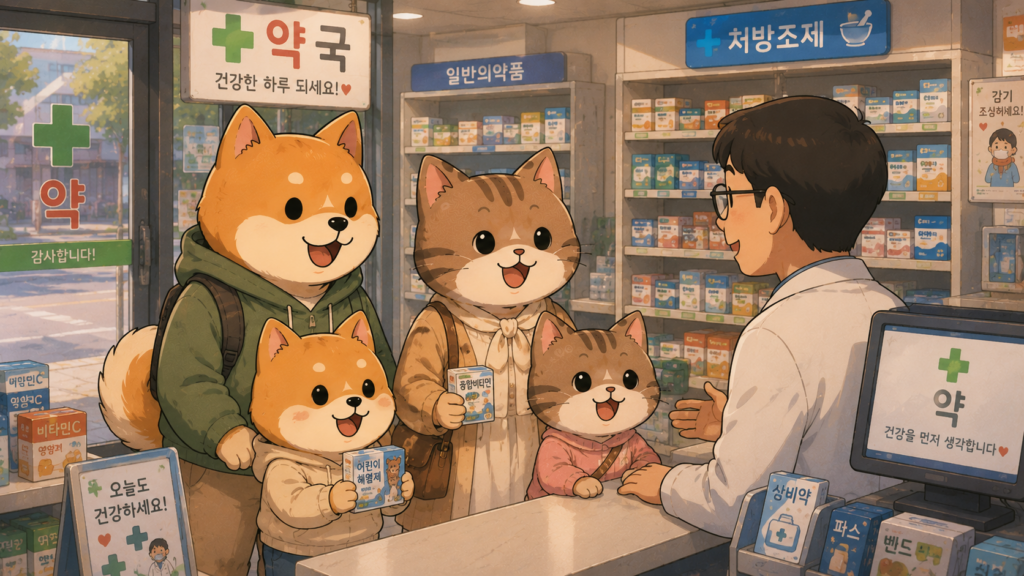
In Korea, a pharmacy is called “약국” and it is usually written in large Korean letters on the sign.
The Korean word is:
약국
Yak-guk
Pharmacy
Many pharmacies have signs in green, blue, red, or white, and you can often find them near clinics, hospitals, subway stations, markets, and busy streets.
How to Recognize a Korean Pharmacy
Look for signs that say:
- 약국
- Pharmacy
- Drugstore
- Medicine
Some pharmacies in tourist areas may have English signs, but smaller local pharmacies may only show Korean signs.
A Local Tip for First-Time Travelers
If you see many clinics in one building, there is often a pharmacy nearby.
In Korea, it is common for people to visit a clinic first and then go to a nearby pharmacy to pick up prescribed medicine.
This is why pharmacy signs are often easy to find around medical buildings.
2. Korean Pharmacy Guide: When Should Travelers Visit a Pharmacy?
A Korean pharmacy is useful for mild travel discomfort or basic over-the-counter medicine.
Travelers may visit a pharmacy for things like:
- Headache
- Mild cold symptoms
- Digestive discomfort
- Motion sickness
- Muscle patches
- Bandages
- Skin irritation
- Basic vitamins
- Throat lozenges
This does not mean you should treat serious symptoms by yourself.
If symptoms feel serious, sudden, or unusual, it is safer to visit a clinic or hospital.
A Careful Health Tip for Travelers
Pharmacists in Korea can help recommend common over-the-counter medicine, but they are not a replacement for a doctor.
If you have strong pain, high fever, breathing difficulty, allergic reactions, chest pain, or symptoms that feel dangerous, do not rely only on a pharmacy.
In an emergency, call 119 in Korea.
For general official travel health information, you can check the official Visit Korea pharmacy guide.
3. Korean Pharmacy Guide: What You Can Usually Buy
Korean pharmacies sell many common travel health items.
You can usually find:
- Pain relief medicine
- Cold medicine
- Digestive medicine
- Motion sickness medicine
- Throat lozenges
- Bandages
- Ointments
- Muscle pain patches
- Eye drops
- Vitamins
- Masks
- Thermometers
Things That May Require a Prescription
Some medicine that may be easy to buy in another country can require a doctor’s prescription in Korea.
This can include certain antibiotics, stronger pain medicine, or specific prescription drugs.
A Local Pharmacy Tip
If you need a specific medicine, bring the original package or a photo of the ingredient name.
Brand names can be different in Korea, so showing the active ingredient is often more helpful than saying only the product name from your country.
If you take regular medicine, it is best to bring enough from home and carry it in its original packaging.
4. How to Ask for Medicine in a Korean Pharmacy
Many pharmacists in tourist areas can understand simple English, but not every pharmacy will be comfortable with English conversation.
You do not need perfect Korean.
Simple words, gestures, and translation apps usually help a lot.
Useful Korean Pharmacy Phrases
Here are simple phrases that can help:
이거 있어요?
Igeo isseoyo?
Do you have this?
두통약 있어요?
Dutong-yak isseoyo?
Do you have headache medicine?
소화제 있어요?
Sohwaje isseoyo?
Do you have digestive medicine?
감기약 있어요?
Gamgi-yak isseoyo?
Do you have cold medicine?
A Practical Local Tip
If you feel nervous, use Papago and show the translated sentence to the pharmacist.
This is very normal.
Many Koreans also use their phones when they need to explain something clearly.
If you want more useful Korean expressions for your trip, read our Korean Phrases for Travelers guide.
5. Korean Pharmacy Guide for Stomach Problems While Traveling
Stomach discomfort is one of the most common problems travelers experience.
Korean food is delicious, but the flavors can be stronger than what some visitors are used to.
Spicy food, street food, alcohol, coffee, and a busy travel schedule can sometimes upset your stomach.
What to Tell the Pharmacist
You can explain your symptoms simply:
- Stomachache
- Diarrhea
- Indigestion
- Nausea
- Motion sickness
If you cannot explain clearly, use a translation app.
A Korean Travel Food Tip
Do not try too many spicy foods on the first day.
Many travelers get excited and eat tteokbokki, spicy noodles, and spicy stew all in one day.
That can be too much for some stomachs.
If you are sensitive to spicy food, start with mild dishes first.
For food ideas, check our Korean Food Guide for Beginners.
6. Korean Pharmacy Guide for Cold Symptoms in Korea
Some travelers get cold symptoms after long flights, weather changes, or walking outside all day.
This can happen especially in winter, early spring, or during seasonal changes.
Korean pharmacies usually sell different types of cold medicine, but it is important to explain your symptoms clearly.
Common Symptoms to Explain
You can tell the pharmacist if you have:
- Sore throat
- Runny nose
- Cough
- Fever
- Headache
- Body aches
A Local Tip About Korean Cold Medicine
Some Korean cold medicines can make you sleepy.
If you plan to go sightseeing, take transportation, or drink alcohol later, ask the pharmacist whether the medicine may cause drowsiness.
A simple sentence you can show is:
“Does this medicine make me sleepy?”
This is an easy and important question for travelers.
7. Korean Pharmacy Guide for Parents and Older Travelers
If you are traveling with parents or older adults, pharmacies can be useful, but preparation matters more.
Older travelers may already take regular medicine from home.
In that case, do not assume the same product will be easy to find in Korea.
What Older Travelers Should Prepare
Before traveling, prepare:
- Regular prescription medicine
- Original packaging
- Doctor’s note if needed
- List of medicine names
- Active ingredient names
- Allergy information
- Emergency contact information
A Careful Local Tip
If your parents take regular medicine, bring enough for the whole trip.
A Korean pharmacy may not have the exact same medicine brand.
Even if similar medicine exists, it is better not to change regular medicine casually during travel.
For a more comfortable family trip, you may also like our Korea Family Travel Guide.
8. Where to Find Pharmacies in Korea
Pharmacies are usually easy to find in Korean cities.
Good places to look include:
- Near subway stations
- Near hospitals
- Near clinics
- Around busy shopping areas
- Around traditional markets
- Near large apartment areas
Use Naver Map or KakaoMap
For finding pharmacies, Naver Map and KakaoMap are often more useful than Google Maps in Korea.
Search for:
약국
or
pharmacy
A Local Search Tip
If you search “약국” on Naver Map, you can often find nearby pharmacies more easily.
You can also check opening hours, reviews, and directions.
If you are not used to Korean map apps, read our Best Apps for Traveling in Korea guide.
9. Are Korean Pharmacies Open at Night?
Many regular pharmacies close in the evening.
This is something travelers should know in advance.
If you feel sick late at night, finding an open pharmacy may be harder than during the day.
Some areas have late-night or holiday pharmacies, but they may not be everywhere.
What to Do at Night
If you need medicine at night:
- Search for nearby pharmacies on Naver Map
- Ask hotel staff
- Look for public late-night pharmacies
- Visit a hospital or emergency center if symptoms are serious
- Call 119 in an emergency
A Local Tip for Night Travel
If you feel mild symptoms starting during the day, do not wait until midnight.
It is easier to visit a pharmacy before regular closing time.
This is especially important when traveling with parents, children, or older adults.
10. Korean Pharmacy Guide: Convenience Stores Are Not the Same as Pharmacies
Some travelers think convenience stores and pharmacies sell the same medicine.
They do not.
Korean convenience stores may sell some basic emergency items or limited medicine-related products, but pharmacies usually have more options and professional pharmacist advice.
When to Choose a Pharmacy Instead
Visit a pharmacy if you need:
- Medicine advice
- Digestive medicine
- Cold medicine
- Pain relief options
- Motion sickness medicine
- Skin ointment
- More specific products
A Practical Local Tip
Convenience stores are useful for water, masks, tissues, snacks, and simple travel items.
But if you actually need medicine, look for a pharmacy sign that says “약국.”
For general convenience store tips, check our Korea Convenience Store Guide for First-Time Visitors.
11. Korean Pharmacy Etiquette for Travelers
Korean pharmacies are usually small and practical.
The atmosphere may feel more direct than pharmacies in some countries.
You usually walk in, explain what you need, buy medicine, and leave.
Simple Etiquette Tips
When visiting a pharmacy:
- Wait your turn
- Speak clearly and calmly
- Show photos or translation if needed
- Ask about dosage carefully
- Do not block the counter too long
- Keep your receipt if needed
A Local Communication Tip
If the pharmacist explains something quickly in Korean, do not pretend to understand.
It is completely okay to ask them to write it down or use a translation app.
Medicine instructions matter, so clarity is more important than speed.
12. Common Mistakes Travelers Make at Korean Pharmacies
A few small mistakes can make pharmacy visits more confusing.
Asking Only by Foreign Brand Name
Brand names can be different in Korea.
Try showing the active ingredient or package photo.
Waiting Until Late at Night
Many pharmacies close in the evening, so it is better to go earlier.
Not Mentioning Allergies
If you have medicine allergies, show that information clearly.
Assuming All Medicine Is Over-the-Counter
Some medicine requires a doctor’s prescription in Korea.
Not Asking About Drowsiness
Some medicine may make you sleepy, so ask before taking it during a travel day.
13. Final Thoughts About This Korean Pharmacy Guide
This Korean Pharmacy Guide is not something travelers hope to use, but it can make your trip much less stressful if you need it.
Korean pharmacies are usually easy to find in cities, and pharmacists can often help with common travel discomfort.
The most useful things you can do are simple.
Bring your regular medicine from home.
Save your allergy and medication information.
Use Papago when needed.
Search “약국” on Naver Map.
Visit pharmacies earlier in the day if you feel unwell.
And if something feels serious, do not rely only on a pharmacy. Get medical help or call 119 in an emergency.
A little preparation can make your Korea trip safer, calmer, and more comfortable.
FAQ
What is the Korean word for pharmacy?
The Korean word for pharmacy is “약국” and it is pronounced “yak-guk.”
Can tourists buy medicine at Korean pharmacies?
Yes, tourists can buy many common over-the-counter medicines at Korean pharmacies. Some medicine may require a doctor’s prescription.
How can I find a Korean pharmacy near me?
You can search “약국” or “pharmacy” on Naver Map or KakaoMap to find nearby pharmacies in Korea.
Are Korean pharmacies open at night?
Many regular pharmacies close in the evening, but some late-night or holiday pharmacies may be available depending on the area.
What should I bring if I take regular medicine?
Bring enough medicine from home, keep it in the original packaging, and carry a list of medicine names, active ingredients, and allergy information.