
You don’t have to drink to enjoy Korea. But if you do — or if you find yourself sitting across from a Korean colleague, host, or new friend with a bottle of soju on the table — knowing just a little about Korean drinking culture will change the whole experience.
Here’s something that doesn’t get said enough: Koreans genuinely notice when a foreigner makes an effort to understand their customs. A simple 건배 at the right moment, or knowing to accept a drink with two hands — these small gestures signal respect, and respect opens doors in Korea faster than almost anything else.
You don’t need to memorize a rulebook. Just a few things, learned before you go, can turn a dinner into a real connection.
Why Korean Drinking Culture Is Different From What You’re Used To
In Korea, drinking isn’t really about the alcohol. It’s about the relationship.
According to Wikipedia’s overview of Korean drinking culture, alcohol consumption in Korea has historically been tied to social bonding, family rituals, and workplace connections. The table is where relationships are built, trust is established, and the formal distance between people softens. The drink is just the vehicle.
This is why Korean drinking etiquette feels so specific compared to most Western drinking cultures. Every gesture at the table — who pours, who receives, when you drink, how you hold the glass — carries meaning. None of it is arbitrary. Once you understand what’s behind the rules, they stop feeling like rules and start feeling like a language.
The Drinks You’ll Actually See in Korea
Before the etiquette, a quick guide to what’s in the glass.
소주 (Soju)
The green bottle. Korea’s most iconic drink, available at virtually every restaurant, convenience store, and pojangmacha tent in the country. Soju is a clear distilled spirit, typically around 16–25% ABV, and is usually drunk straight in small shot glasses — no ice, no mixer.
If straight soju sounds intimidating for your first time, look for fruit-flavored versions — peach, strawberry, grapefruit — which are lighter, sweeter, and very popular with first-time visitors. The green bottle at a Korean BBQ table is practically unavoidable, so it’s worth at least trying a sip. Our How to Eat Korean BBQ: The First-Timer’s Complete Guide covers more on the full BBQ experience including what to order and eat alongside your drinks.
맥주 (Beer)
Korean beer brands like Terra, Cass, and Hite are light, easy-drinking lagers. Very approachable for any taste preference.
소맥 (Somaek) — Soju + Beer
This is Korea’s most popular combination — soju poured into beer, stirred with chopsticks, drunk together. The ratio varies, but the result is something smoother than soju alone and stronger than beer alone. If someone offers to make you somaek, say yes at least once. It’s a distinctly Korean experience.
막걸리 (Makgeolli)
Korea’s oldest alcoholic drink — a cloudy, slightly sparkling rice wine that’s sweet, a little tangy, and much lower in alcohol than soju. Served cold in a bowl or a small cup, often with savory pancakes (파전, pajeon) as the classic pairing. If you’re visiting traditional markets or mountain areas, you’ll see it everywhere.
The Etiquette That Actually Matters
This is where Korean drinking culture gets interesting — and where a little knowledge goes a very long way.
Never Pour Your Own Glass
In Korean drinking culture, you don’t fill your own glass. You pour for the people around you, and they pour for you. Watching each other’s glass and refilling it is how Koreans show care and attention at the table. Reaching for the bottle to pour your own drink is considered poor form — like serving yourself before your guests at a dinner party.
Use Two Hands When Pouring or Receiving
When pouring a drink for someone older than you, hold the bottle with both hands. When receiving a drink from someone older, hold your glass with both hands — or support your right wrist with your left hand. This is one of those small gestures that Koreans genuinely notice, and it signals respect for the social hierarchy that runs through so much of Korean culture.
Turn Your Head When Drinking in Front of Elders
When drinking with someone older or more senior, turn your head slightly to the side when you take the shot. It’s a gesture of humility — a subtle acknowledgment that you’re aware of who you’re with. You don’t need to make a big performance of it. A slight turn, eyes down, is all it takes.
Always Join the Cheers
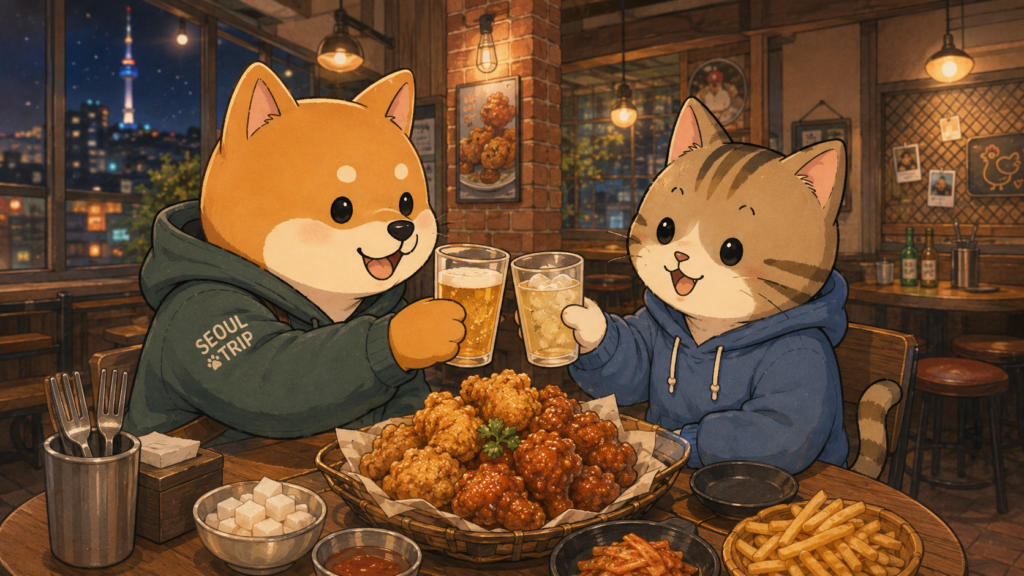
When someone raises a glass and says 건배 (geonbae — “cheers”) or 위하여 (wihayeo — “for the sake of it!”), join in. Clink glasses, make eye contact, and drink. Sitting out the toast without explanation can feel dismissive to the group.
From my experience, this is one of the simplest things a first-time visitor can do to immediately feel included at a Korean table. You don’t even need to speak Korean fluently — just raise your glass, say 건배, look people in the eye, and smile. That single moment breaks more ice than an hour of small talk.
안주 (Anju): The Food That Goes With Everything
One thing that distinguishes Korean drinking culture from many Western drinking scenes: you almost never drink without food.
안주 (anju) is the term for food eaten while drinking — side dishes, snacks, or full meals served alongside alcohol. At a Korean BBQ restaurant, the meat is the anju. At a pojangmacha tent, it might be tteokbokki or fish cakes. At a bar, it might be fried chicken or seasoned dried squid.
The food isn’t optional. Drinking without anju is considered unusual in Korean culture, and the combination of the right drink with the right anju is taken seriously. Some classics worth knowing:
- Soju + samgyeopsal (pork belly) — the most iconic pairing in Korean food culture
- Makgeolli + pajeon (savory pancakes) — a traditional combination that shows up at every pojangmacha
- Beer + fried chicken — the beloved chimaek (chicken + maek-ju/beer) that Koreans take very seriously
For more on Korean street food and snacks you’ll encounter at outdoor drinking spots, our Korean Street Food Guide: 15 Must-Try Foods for First-Time Visitors has everything worth trying.
If You Don’t Drink: What to Do
Korean drinking culture is social — not mandatory.
If you don’t drink for health, religious, or personal reasons, Koreans will respect it. The clearest way to decline is to say you’re on medication (약을 먹고 있어서요, yageul meokgo isseoseo — “I’m taking medicine”). You can also simply accept the glass without drinking from it — participating in the gesture of the toast is what matters most, not consuming the alcohol.
Pojangmacha tents and modern Korean bars increasingly offer non-alcoholic beers, sparkling teas, and hangover drinks, so there are good options if you want to be part of the scene without drinking.
A Word on Respect
Here’s what I’d tell any first-time visitor thinking about their first night out in Korea: you don’t need to get every rule perfectly right. Koreans are forgiving and genuinely appreciate the effort far more than the execution.
What matters is the intention. Knowing to say 건배. Knowing to use two hands. Knowing not to pour your own glass. These are small things that take five minutes to learn — but they show the people you’re with that you took the time to understand their culture before you arrived. In Korea, that kind of respect doesn’t go unnoticed.
The best travel experiences don’t come from seeing the most places. They come from connecting with the people in them. And in Korea, a lot of those connections start around a table with a green bottle.
FAQ
Do I have to drink alcohol in Korean drinking culture?
No. While drinking is a big part of Korean social culture, it’s perfectly acceptable to decline — especially if you mention medication, health reasons, or a personal preference. You can still join the toast with water or a non-alcoholic drink. Koreans appreciate the gesture of participating even without drinking.
What is 건배 and when do I say it?
건배 (geonbae) is the Korean word for “Cheers!” You say it when raising glasses before drinking. Another common expression is 위하여 (wihayeo), which means roughly “for the sake of it!” Either works — raise your glass, make eye contact with everyone at the table, and drink together.
What is somaek and should I try it?
소맥 (somaek) is a mixture of soju and beer — Korea’s most popular drinking combination. It’s smoother than straight soju and stronger than beer alone. If someone offers to make you one on your first night out in Korea, it’s worth trying at least once. It’s a very Korean experience.
Is it rude to pour your own drink in Korea?
Yes, in Korean drinking culture, pouring your own drink is considered poor form. The expectation is that you pour for others and they pour for you. Watching each other’s glass and refilling it is a way of showing care and attention at the table.
What food is typically eaten while drinking in Korea?
안주 (anju) — food served alongside alcohol — is a fundamental part of Korean drinking culture. Common combinations include soju with samgyeopsal (grilled pork belly), makgeolli with pajeon (savory pancakes), and beer with fried chicken (chimaek). Drinking without food is considered unusual in Korean social settings.